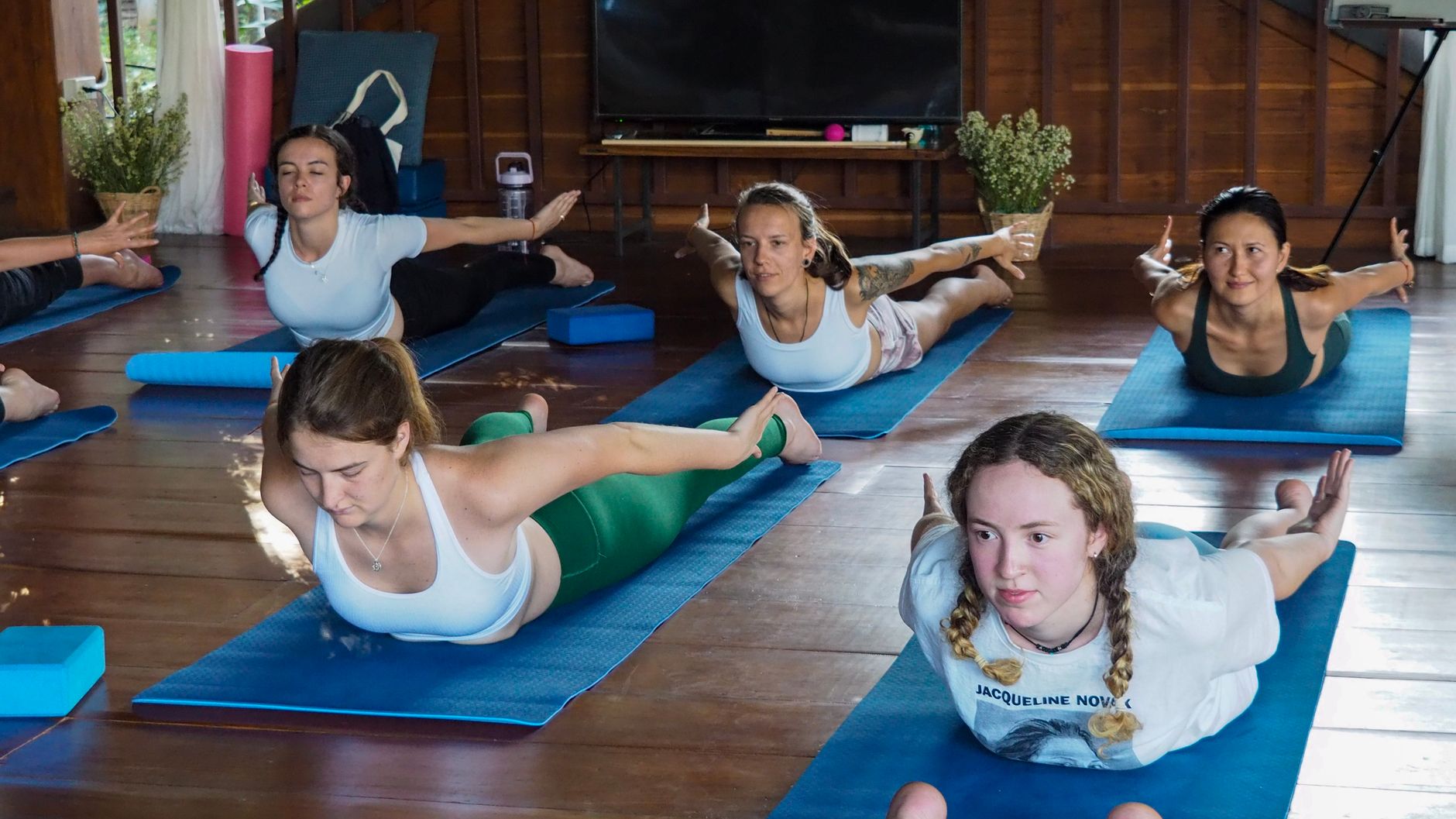
Why Women-Only Retreats Are Having a Moment
Something has shifted in how women seek rest. The generic mixed-group wellness weekend still sells, but a growing segment of women actively searches for spaces that are explicitly theirs — no mixed-energy compromises, no self-editing, no explaining. They want depth, and they are willing to travel internationally to find it.
Mexico sits at the center of this demand. Proximity to the United States and Canada, a strong peso-to-dollar exchange rate, world-class natural settings, and a deeply rooted tradition of curanderismo and plant-based healing make the country a natural magnet for women-centered wellness travel. If you are an independent retreat leader weighing your next offering, this niche deserves a serious look — not because it is trendy, but because the conditions that make it viable are structural, not temporary.
Reading the Market Signals
You do not need a research budget to understand demand. A few hours of honest observation will tell you a lot.
Search behavior. Open any keyword tool and compare search volume for a generic term like "yoga retreat Mexico" against "women's retreat Mexico" or "women-only retreat Mexico." The gap is closing faster than most retreat leaders realize. More importantly, the women-only searcher tends to have higher purchase intent — she is not browsing; she is choosing.
Social proof in Facebook groups. Inside the largest wellness travel communities on Facebook, requests that follow the pattern "Looking for a women-only retreat in [destination]" appear constantly. These are warm leads that nobody is catching. If you run a women-only offering in Mexico and you are not present in those conversations, someone else will be.
Waitlist behavior. Talk to any retreat leader who has run a women-only program more than twice. Almost universally, they report that alumni sign up for the next round before the sales page is live. Repeat attendance in a niche retreat is one of the clearest signals that the container itself — not just the destination or the modality — is the product.
Choosing Your Mexico Setting Strategically
Mexico is not one market. Where you host your retreat shapes the story you can tell and the guest you will attract.
Tulum and the Riviera Maya carry strong brand recognition in the wellness world. The infrastructure — eco-hotels, cenotes, cacao ceremony facilitators, sound healers — is dense and accessible. The trade-off is noise: competition is high and prices for venues have risen accordingly. For a women-only retreat here, your differentiation has to live in the programming and community, not the postcard backdrop.
Oaxaca offers something different. The combination of indigenous textile culture, mezcal tradition, culinary heritage, and highland landscapes creates a richly textured setting for retreats that want to go deeper than asana. A women's retreat in Oaxaca can weave in market visits, natural dyeing workshops, or ancestral cooking without feeling forced. The city also has a slower pace that supports introspection.
San Miguel de Allende appeals to a slightly older, design-conscious demographic. Its colonial architecture and established arts scene make it a compelling backdrop for retreats that blend creative practice — journaling, painting, ceramics — with yoga and somatic work. Airfare is the main friction point since it requires a connection, but the guest who is right for San Miguel is often undeterred.
Sayulita and the Pacific coast split the difference: accessible from major US cities, bohemian in feel, surf culture as backdrop. A women-only retreat here that leans into ocean rituals, breathwork, and evening fire circles can fill quickly, especially for the 35–50 demographic looking for adventure without roughing it.
The strategic move is to match setting to psychographic, not just geography. Ask: who is already drawn to this place, and does she overlap with the woman I am designing this retreat for?
Positioning Your Women-Only Retreat
Positioning is the work that happens before the sales page. It is the honest answer to: why this, why here, why with me, and why not the alternative?
Lead with the container, not the curriculum. Women who choose women-only retreats are not primarily buying a yoga style or a meal plan. They are buying the felt sense of safety, community, and permission to take up space. Your positioning should name that directly. Phrases like "a space held entirely by and for women" or "seven days without performing" speak to the real purchase motivation.
Be specific about who it is for. The instinct to market to everyone costs you the attention of the person who would actually book. A women-only retreat for women navigating major life transitions — divorce, empty nest, career pivot — is a sharper offer than a retreat for women in general. A retreat for women who have never done yoga but are curious is a different product from one for experienced practitioners ready to go deeper. Specificity is not exclusion; it is signal.
Your facilitation identity matters. In a women-only container, the leader is part of the product in a more intimate way than in a general retreat. Share your own story with appropriate selectivity. Why do you lead women's spaces? What have you witnessed in those rooms that you do not see elsewhere? Authenticity here is not a soft quality; it is a conversion driver.
Pricing for This Niche
Women-only retreats command a premium, and understanding why helps you price with confidence rather than apology.
The transformation premium is real. When the container itself — the single-gender environment, the intentional community — is part of the transformation, guests perceive the whole experience as higher value. You are not just selling accommodation and classes; you are selling access to a specific quality of connection that cannot be replicated at home or in a co-ed setting.
Group size works in your favor. Most independent retreat leaders run women-only programs with smaller group sizes — often eight to fourteen participants — to preserve intimacy. Smaller groups require higher per-head pricing to meet your numbers. Frame this honestly in your marketing: the small group is not a limitation; it is a feature that justifies the price.
Build your pricing from costs up, not from fear down. Start with your hard costs: venue, food, ground transport, facilitator fees if you bring in co-teachers, payment processing, and travel. Add your time for planning, facilitation, and follow-up. Then add your margin — the amount that makes the retreat worth running and allows you to sustain the work. Many retreat leaders skip the last step and wonder why they burn out.
Payment plans reduce friction without reducing price. For a higher-ticket international retreat, offering a deposit plus one or two installments removes the psychological barrier of a large upfront number. The full price does not change; the path to commitment does. This is particularly effective in the women's market, where community referrals drive many bookings and a friend vouching for the program already handles most of the trust-building.
Early bird windows create urgency without discounting your value. A modest reduction for the first few bookings rewards decisive action and helps you validate demand before you are fully committed to a venue contract. Close the early bird window firmly and on schedule — ambiguity about pricing erodes trust.
Filling the Retreat: Channels That Work
The women-only niche rewards relationship-based marketing over paid advertising, at least at the start.
- Alumni referrals are your most efficient channel. Create a simple referral mechanism: a thank-you gift, a discount on a future retreat, or early access to the next round.
- Collaborations with aligned facilitators — therapists, somatic coaches, pelvic floor specialists, herbalists — expand your reach into communities that trust them. A co-marketing email or Instagram story from a respected practitioner in her field carries more weight than most ad spend.
- Podcast guesting in the wellness and women's personal development space builds authority and generates warm leads over time. The barrier to entry is lower than most retreat leaders assume.
- Email list health matters more than size. A list of a few hundred engaged women who have opted in because they resonate with your work will outperform a larger, colder list every time.
A Few Things to Get Right Operationally
Before you open registration, lock in these details.
Venue vetting. Visit in person when possible, or use video calls with venue managers who can walk you through the space. Confirm that the property can be exclusively yours for the dates — shared venues create unpredictable energy in an intimate women's container.
Clear communication about what women-only means. Set your policy and state it plainly in your FAQ. Clarity upfront prevents friction later and attracts guests who are specifically seeking that environment.
Contingency budget. International retreats carry logistical variables — weather, illness, supplier cancellations. Build a contingency line into your budget from the start, not as an afterthought.
Legal basics. A signed participant agreement covering cancellation policy, liability, health disclosures, and photography consent is non-negotiable. Consult a local attorney if you are unsure what is enforceable in Mexico.
The Longer Game
The retreat leaders who build durable businesses in this niche are not chasing a trend. They are building a community. Each cohort becomes part of the story you tell the next cohort. The women who attended your first Mexico retreat become the social proof, the referral engine, and often the co-creators of what the program becomes over time.
Run this retreat with integrity once, and you will understand why so many retreat leaders stop thinking of it as a one-time offering and start thinking of it as an annual homecoming.
RetreatsOS is built to help retreat leaders manage exactly this kind of growing, relationship-driven business.
Photo: Yoga Samaadhi / Pexels