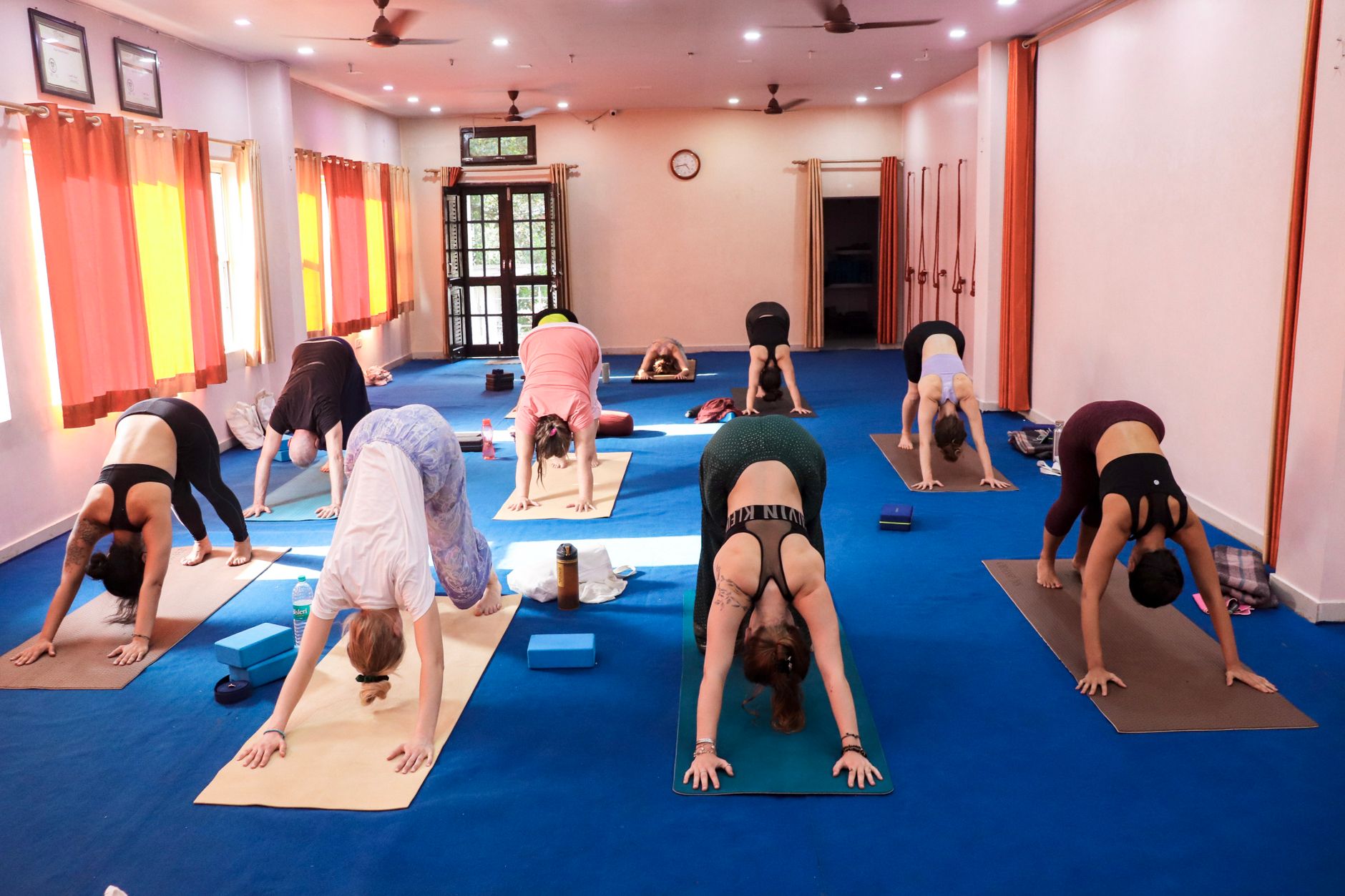
There's a common shortcut in beginner yoga class design: take your regular sequence, slow it down, skip the harder poses, and call it beginner-friendly. It's understandable—you're busy, you know your material, and the class still looks accessible.
But students who are truly new to yoga can feel the difference. They sense they're getting a lesser version of something, rather than a class built specifically for them. And that feeling is exactly what keeps them from booking your next retreat.
Building a genuinely beginner-appropriate class takes a different kind of thinking. Here's how to do it well.
Understand What a Beginner Actually Needs
Before you redesign anything, it helps to get clear on who a beginner student really is. They're not just someone who moves slowly. They're someone who:
- Has no internal map of their own body in space
- Doesn't yet know what a pose should feel like, only what it should look like
- Has no vocabulary for cues like "root your femur" or "lengthen your tailbone"
- May be carrying anxiety about looking foolish in front of others
This last point matters more than most teachers acknowledge. A beginner's nervous system is often activated just by being in the room. Any class design that ignores this will feel stressful, no matter how gentle the poses.
Your job in a beginner class isn't just to offer easier shapes. It's to build the internal skills—body awareness, breath connection, proprioception—that make every future yoga experience richer.
Start With Sensation, Not Shape
Intermediate classes typically teach poses as destinations. You arrive in Warrior II, hold it, move on. Beginners need a different model: they need to discover poses from the inside out.
That means leading with sensation before you ever name a pose.
For example, instead of opening with "let's come into Mountain Pose," try this sequence of instructions:
- Stand with your feet hip-width apart.
- Soften your knees slightly and notice if your weight shifts.
- Press all four corners of each foot into the floor. Notice what that does to your legs.
- Take a breath and feel your ribcage expand. Let it fall naturally on the exhale.
- This is Tadasana—Mountain Pose. You've already been in it for a minute.
This approach gives students something to feel, which creates a real reference point. Next time they hear "find your Mountain Pose," they know what they're looking for internally, not just externally.
Build the Class Around Three Foundation Skills
Rather than organizing a beginner class around a peak pose (the intermediate model), organize it around three transferable skills that will serve students in every yoga class they ever take.
1. Breath as an anchor. Many beginners hold their breath without realizing it. Spend real time—not a brief intro—helping students find the rhythm of natural breath and then begin to sync movement with it. Simple exercises: exhale to fold forward from standing, inhale to rise. Repeat it five times, with no other instruction. Let them feel the connection.
2. Stable base before extension. This is the foundational principle behind almost every yoga pose: you can only reach as far as your base is stable. Teach it in low lunge before you teach Warrior I. Have students press their back knee down, feel the floor, stabilize—and then, only then, lift their arms. The experience of instability followed by stability is itself the lesson.
3. Proprioception in transitions. Beginners often get lost between poses—that's when they look around, feel behind, lose their breath. Design your transitions as learning moments, not just connecting tissue. Slow down the movement from Downward Dog to a low lunge. Narrate what's happening: "Your hip is moving forward, your back foot is staying grounded, your spine is long." The transition becomes as educational as the pose.
Structure the Arc of the Class Deliberately
A well-designed beginner class has a clear arc. Here's a structure that works across different styles and lengths:
Opening (10–15% of class time): Grounding and body inventory. This is not the time for ambitious warm-up sequences. Use it for breath work, simple body scans, or slow joint mobilization. The goal is to bring students into their bodies before asking them to do anything specific.
Skill introduction (20–25%): Isolate and explore the first foundation skill you're teaching that day. If it's stable base, work it in supine or seated positions first, before bringing anyone to standing.
Standing sequence (30–35%): Keep it short and repetitive. Two or three standing poses, practiced multiple times, is more valuable than eight poses practiced once. Repetition is how beginners build body memory. Each round, offer a slightly deeper layer of instruction.
Floor work (20–25%): Use this phase to integrate what was learned standing. A simple seated forward fold means something different once a student understands stable base and breath as anchor.
Closing (10%): A longer Savasana than you think they need. Beginners often process physical learning during rest. Don't rush it.
Rethink How You Use Modifications
In many intermediate classes, modifications are presented as the "easier option" for people who can't do the real pose. This framing actively harms beginner students. It tells them they're doing a lesser version of something.
Flip the script entirely. In a beginner class, the modification is the pose. When you teach a supported bridge with a block under the sacrum, don't introduce it as "an option if full bridge is too much." Teach it as Bridge Pose, full stop, and explain why the support allows the muscles to release more fully.
This isn't just semantics. When beginners feel like they're doing the real thing—not a consolation prize—their confidence and engagement change visibly.
Some practical moves:
- Remove the words "if you can't" from your cueing entirely
- Offer props at the start of class as standard equipment, not remediation tools
- Teach from the modified version first, then invite students to explore further if they want to
Cueing Language for Beginners Is Its Own Skill
Yoga has a lot of internal jargon. Some of it is useful shorthand between experienced practitioners. Almost none of it lands with a beginner.
Audit your most common cues and translate them:
- "Engage your core" → "Gently draw your lower belly in and up, as if you're zipping up a fitted jacket"
- "Stack your joints" → "Try to arrange your ankle, knee, and hip so they're in a vertical line"
- "Soften your gaze" → "Let your eyes rest somewhere in front of you without focusing hard on anything"
Use anatomical landmarks beginners actually know: knee, hip, shoulder, ribcage, heel. Avoid Sanskrit entirely for the first several sessions, unless you teach it deliberately as vocabulary.
Also: slow down your verbal pacing. Beginners are processing movement and language simultaneously. If your cues come too fast, they'll follow the person next to them instead of your words—which means they learn from observation, not from internal sensation. That's the opposite of what you're building.
Repetition Is Respect
One of the most counterintuitive things about beginner class design: doing less is doing more.
Teachers often feel pressure to cover a lot of ground, to give students their "money's worth" through variety. But for beginners, returning to the same pose four times in a class—each time with a slightly new layer of understanding—is exponentially more valuable than moving through twelve different poses once.
Repetition says to a student: this is worth taking time with. You are worth taking time with.
That's not watered-down yoga. That's precision teaching.
A Note on Retreat Contexts
All of this matters even more in retreat settings, where your beginner students may be attending multiple classes over several days. You have a rare opportunity to build real progressive skill across a sequence of sessions—introducing a foundation concept on day one, deepening it on day two, integrating it on day three.
Design your retreat class arc the same way you'd design a single class: sensation before shape, stable base before extension, repetition before variety. The students who leave your retreat feeling genuinely transformed are almost always the ones who felt truly seen and taught—not accommodated.
RetreatsOS helps retreat leaders manage the business side of running that kind of experience, so you can keep your focus where it belongs: on the teaching.
Photo: Yoga Vidya Mandiram / Pexels