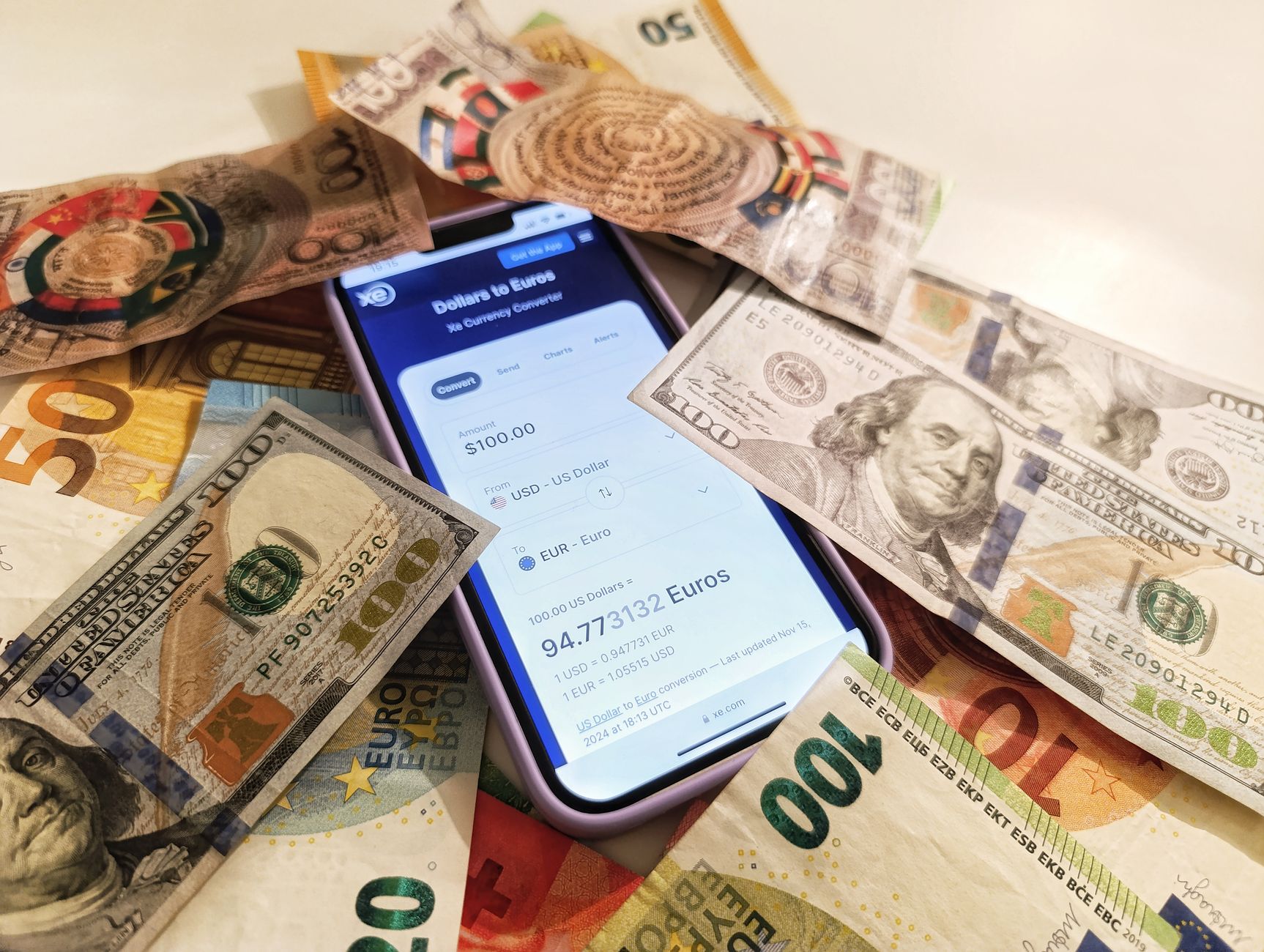
Every time a retreat participant books from another country, a small slice of their deposit quietly disappears before it reaches your bank account. Currency conversion margins, cross-border fees, withdrawal charges — they stack up in ways that are genuinely hard to track. For a retreat leader filling ten spots at a few thousand dollars each, those slices can add up to a meaningful loss by the end of a season.
This guide breaks down three of the most commonly used payment tools — Wise, Stripe, and PayPal — so you can make a clear-eyed choice before your next registration opens.
Why International Fees Hit Retreat Businesses Harder Than Most
Retreats attract participants from all over the world. That is one of the best things about this work. It also means you are almost always dealing with multi-currency transactions, even if your pricing is listed in a single currency.
When someone in Germany pays for your retreat in US dollars, or a participant in Australia books your Bali offering in euros, at least one currency conversion happens somewhere in the chain. Each platform handles that conversion differently — and charges differently for the privilege.
The fees to watch are:
- Transaction fee: a percentage taken from each payment
- Currency conversion margin: the difference between the mid-market exchange rate and what the platform actually gives you
- Cross-border fee: an extra charge applied when the payer's card or account is in a different country
- Withdrawal or payout fee: what it costs to move money from the platform into your bank account
None of these are hidden in a sinister way — they are disclosed in each platform's terms. But they are rarely surfaced clearly at checkout, which is why they feel hidden when you reconcile your books.
Stripe: The Developer-Friendly Standard
Stripe is the backbone of a huge portion of online commerce, and for good reason. It integrates with almost every booking and website tool, handles subscriptions and payment plans cleanly, and gives you a professional checkout experience with minimal setup.
Where Stripe costs you money internationally:
Stripe charges its standard transaction fee plus an additional percentage for cross-border card transactions and another percentage for currency conversion if you choose to present prices in a currency different from your settlement currency. Those two additions layer on top of each other, so an international booking where you are also converting currency carries a noticeably higher effective fee than a domestic one.
When Stripe makes sense for retreats:
If most of your participants pay in your home currency — even if they are physically located elsewhere — the cross-border addition is the only extra cost, and Stripe remains a strong choice. It also shines if you need robust payment plans, instalments, or tight integration with a website or booking system. The reliability and dispute-handling infrastructure are genuinely excellent.
The watch-out: If you are running retreats priced in euros but your bank account is in US dollars, and most of your bookings come from outside the US, those conversion margins compound across every transaction. Run the numbers before assuming Stripe is the cheapest option end-to-end.
PayPal: Familiar But Expensive at Scale
PayPal is the name participants recognise, and that familiarity can help conversion — people trust it. For retreat leaders just starting out, it offers a low-friction way to accept payments without a merchant account.
Where PayPal costs you money internationally:
PayPal's international fees are among the highest of the three tools covered here. They apply a cross-border transaction fee on top of the standard rate, and their currency conversion margin is notably wider than the mid-market rate. If a participant pays you in their local currency and you receive it in yours, that conversion spread is PayPal's to keep.
Withdrawing money from PayPal to a bank account in a different currency adds another layer of conversion cost, depending on how you have your account configured.
When PayPal makes sense for retreats:
PayPal works well for occasional, low-value transactions where the trust factor outweighs the fee difference. Some participants — particularly in certain regions — genuinely prefer it and may not complete a purchase without it. Offering it as a secondary option alongside a lower-cost primary processor is a reasonable middle ground.
The watch-out: For high-value retreat deposits or full payments from international participants, the cumulative fees can be significantly higher than alternatives. If PayPal is your only processor and you are running international retreats regularly, you are almost certainly overpaying.
Wise: Built for Cross-Border Money Movement
Wise (formerly TransferWise) was designed from the ground up to solve exactly the problem retreat leaders face: moving money across currencies without punishing fees. It is not a traditional payment processor in the same way as Stripe or PayPal, but it has evolved to handle business payments, invoices, and even a business account with local bank details in multiple currencies.
Where Wise saves you money:
Wise uses the mid-market exchange rate — the same rate you see on Google — and charges a small, transparent conversion fee on top. There is no hidden margin baked into the exchange rate itself. For currency conversion specifically, this is almost always cheaper than Stripe or PayPal.
With a Wise Business account, you can hold balances in multiple currencies. That means if you receive euros from European participants and your retreat costs are partly in euros, you may not need to convert at all — eliminating the conversion fee entirely for that portion.
A concrete example of how this plays out:
Imagine you are a yoga teacher based in the US running a retreat in Portugal. You price the retreat in euros. Participants from the UK, Australia, and Brazil all book. With Wise, each participant can send euros directly to your euro balance. You pay Portuguese vendors from that balance. Only the profit you want to bring home gets converted to dollars — once, at a transparent rate.
With PayPal, every incoming payment and every outgoing transfer may trigger a conversion event, each one carrying a margin.
When Wise makes sense for retreats:
Wise is strongest when you have genuine multi-currency flows: income in one currency, costs in another. It is also excellent for paying international contractors or co-facilitators. The limitation is that it is not as deeply integrated into booking platforms as Stripe, so you may need to use it for manual invoices or transfers rather than automated checkout.
A Side-by-Side Summary
| Stripe | PayPal | Wise | |
|---|---|---|---|
| Standard transaction fee | Yes | Yes | Varies by use case |
| Cross-border fee | Yes | Yes | Generally lower |
| Currency conversion margin | Added percentage | Wide margin | Mid-market + small fee |
| Multi-currency holding | Limited | Limited | Yes, strong |
| Booking platform integration | Excellent | Good | Manual/invoice focus |
| Best for | Automated booking flows | Familiar option for participants | High-volume international conversion |
A Practical Approach for Retreat Leaders
You do not have to choose just one tool. Here is a framework that many experienced retreat leaders use:
Step 1: Identify your primary currency flows. Where do most of your participants come from? Where are your main retreat costs? If your income and costs are mostly in the same currency, conversion fees matter less.
Step 2: Use Stripe for automated checkout. If you use a booking platform or website with integrated payments, Stripe is usually the most reliable and feature-rich option for the actual transaction. Accept this cost as the price of automation and professionalism.
Step 3: Use Wise to hold and manage international balances. Once payments come in, transfer them to a Wise Business account if you need to convert or hold multiple currencies. Use Wise's rate rather than Stripe's or PayPal's for the conversion step.
Step 4: Offer PayPal selectively. Make it available for participants who request it, but do not build your primary payment flow around it.
Step 5: Review your fees once per season. Pull your payment reports and calculate the effective rate you paid across all international transactions. Even a small fee reduction across a full retreat season is real money back in your pocket.
The Bigger Picture
Payment fees are one of those costs that feel small until you look at them annually. A retreat business earning a meaningful portion of its revenue from international participants and routing everything through high-margin tools is effectively giving away a portion of every booking.
The good news is that the tools to reduce this cost are accessible, well-documented, and not technically complex. The main requirement is taking an hour to understand your actual fee structure and making a deliberate choice rather than defaulting to whatever was easiest to set up.
Your time, expertise, and the experience you create for participants are worth protecting. So is the revenue that makes it sustainable.
RetreatsOS is built to help retreat leaders run the business side of their work with less friction and more clarity.