You registered weeks ago. You've read the welcome email three times. You've packed, repacked, and quietly wondered whether you made the right call.
That mix of anticipation and low-grade anxiety before a retreat is completely normal. What helps most people move through it isn't more information about the schedule—it's understanding what has already been happening on the other side of the equation. Because by the time you walk through the door, a significant amount of invisible work has already been done on your behalf.
Here's a realistic look at what retreat leaders and their teams do before day one, and why that preparation shapes everything you're about to experience.
The Logistics Start Long Before You Do
Most participants assume planning a retreat is a matter of booking a venue, writing a schedule, and sending emails. The reality is considerably more layered.
Several weeks out—sometimes months, depending on the size—retreat leaders are coordinating between venues, caterers, transport providers, guest facilitators, and their own support staff. They're tracking dietary requirements, accessibility needs, and medical considerations that participants mentioned in their intake forms. If you noted that you're vegetarian, or that you need a ground-floor room, or that you're managing a health condition, that information is already sitting in someone's planning document.
Meals, in particular, demand more attention than most people expect. A retreat kitchen isn't just feeding people—it's holding space for the energy of the group. Leaders think carefully about portion sizes, meal timing, and how food transitions connect to the emotional arc of the day. A heavy lunch before an afternoon of inner work lands very differently than a light one.
Your Intake Form Is Read More Carefully Than You Think
If your retreat asked you to fill out a questionnaire before arriving, resist the urge to give vague or minimal answers. That form is a primary tool leaders use to understand who is coming and what the group might need.
Experienced facilitators read intake responses not just for logistics but for emotional context. If you wrote that you're nervous about group sharing, that note gets held. If you mentioned a recent loss, a career change, or that this is your first time doing anything like this, a thoughtful leader will factor that into how they open the retreat and how they approach you in those first hours.
This doesn't mean they'll single you out or treat you differently in a visible way. It means they'll design entry points that feel safer—smaller group conversations before full-circle sharing, optional rather than compulsory activities in the early sessions, check-ins that give people room to land gradually.
The Emotional Preparation Is Real Work Too
Logistics are the skeleton of a retreat. But what makes the experience transformative—or simply good—is the emotional container the leader builds around it.
Facilitators spend time before a retreat doing their own internal preparation. This might look like reviewing their facilitation notes, sitting with the arc of the program, thinking about pacing and how to hold space if things get difficult. Many leaders also clear their own schedules in the days before, deliberately avoiding draining commitments so they arrive with genuine presence.
This matters for participants because a depleted leader cannot hold a steady container. The calm you might feel walking into a well-run retreat isn't accidental—it's the result of someone doing quiet, unglamorous prep work so you don't have to feel the seams.
Some facilitators also set intentional boundaries with technology and news in the lead-up period. Not as a performance, but as a practical way to arrive grounded. If you're preparing for a retreat focused on stillness or digital detox, it can help you to do something similar in the days before you arrive.
What the Venue Setup Actually Involves
Arriving to a thoughtfully arranged space feels effortless. Creating that space is anything but.
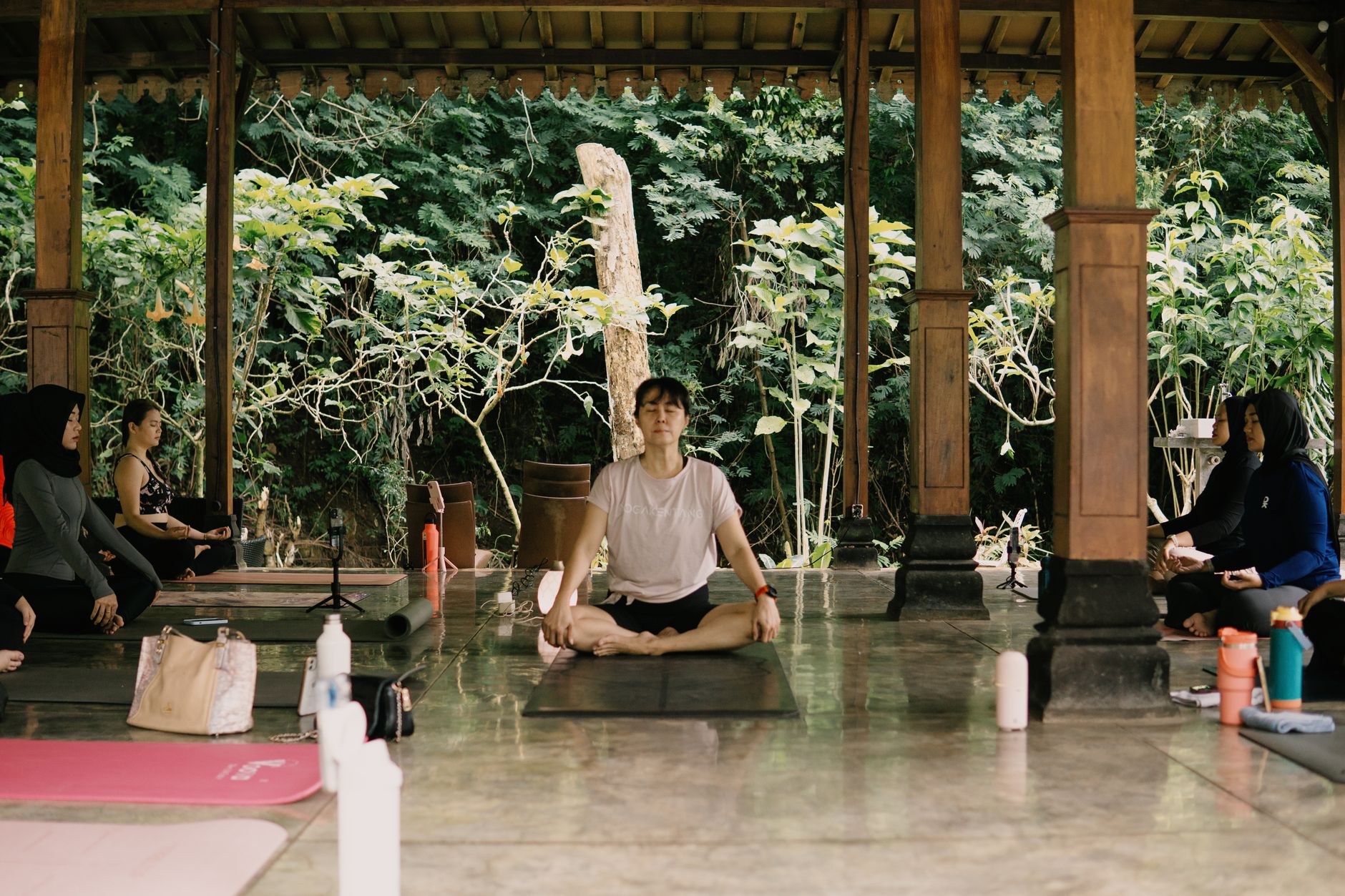
Depending on the retreat format, leaders or their teams will set up the physical environment before participants arrive. This includes room arrangements designed for specific activities—circles for sharing, open floor space for movement, smaller breakout areas for paired work. Lighting, sound, temperature, and even scent are considered. Not as luxury extras, but because sensory environment directly affects how safe and open people feel.
Name cards, welcome notes, or small objects placed on chairs are not just decorative gestures. They signal to participants: you were expected, you belong here, someone thought of you before you arrived.
If the retreat involves materials—journals, art supplies, printed workbooks—those are prepped and checked in advance. Running out of materials mid-session, or discovering a handout has a formatting error, is the kind of friction that pulls everyone out of flow. The goal is to eliminate friction entirely.
The Schedule Is More Flexible Than It Looks
First-time retreat participants often relate to the schedule as a fixed contract. In reality, experienced leaders build flexibility into every day.
Your timetable will have structure—meal times, session starts, rest periods. But skilled facilitators know that the most important moments in a retreat often happen in the margins: the conversation that keeps going five minutes after a session ends, the group that needs more time with a particular exercise, the morning when everyone arrives to circle looking like they need fifteen extra minutes of quiet.
Leaders plan for this. They build buffer time into transitions. They hold backup activities for sessions that end early and know which elements they can cut if something needs to go long. This is why, when a facilitator says "let's take a few more minutes here," it rarely means chaos—it usually means they saw something worth following.
Knowing this can ease participant anxiety considerably. You don't need to watch the clock. You don't need to manage the experience. You can trust that someone is doing that so you don't have to.
Common First-Timer Fears (And What They Look Like From the Other Side)
Most first-time retreat participants carry some version of the same worries:
- What if I cry in front of strangers?
- What if I don't connect with anyone?
- What if I'm the most closed-off person there?
- What if this isn't for me?
Facilitators have seen all of these play out, repeatedly. They know that the person who seems most guarded on day one is often the most open by day two. They know that crying in front of strangers is, for many people, the thing that cracks something open in a useful way. They know that "I don't belong here" is one of the most common feelings in the first few hours of any retreat—and that it almost always shifts.
They're not watching for you to fail or flounder. They're watching for moments to quietly support you before you even notice you needed it.
How to Use This Knowledge Before You Arrive
Understanding what's been prepared doesn't mean you have nothing to do. There are a few things that will help you arrive ready to receive what's been set up for you.
Complete your intake form honestly. Vague answers mean less tailored support. You don't need to write an essay—just be truthful about where you are and what you're carrying.
Give yourself a transition day if possible. Arriving straight from a full workday or a stressful commute means spending the first session decompressing instead of actually being there. If you can protect the evening before or the morning of, do it.
Lower the bar on what "participating" means. You don't need to be your most open, insightful, or emotionally available self from the first hour. Showing up is enough. Everything else follows.
Trust the container that's been built. You didn't see it being constructed, but it's there. The preparation—logistical, emotional, environmental—exists precisely so you can arrive without a plan and still be held.
A retreat is not a service you consume passively. But the first thing it asks of you isn't vulnerability or breakthrough or transformation. It asks you to arrive and let the preparation that happened without you do its job.
The groundwork is already laid. You just have to walk through the door.
Photo: Dwi Rizqi F / Pexels